
Whole Person Care: We Care About More Than Just Your Symptoms
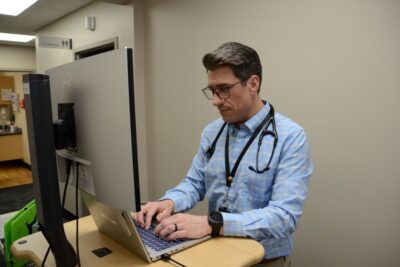
Dan Richmond, PA-C, updates an electronic chart at 11th Avenue Family Medicine Clinic.
Whole Person Care means looking at everything that affects your health, not just what shows up in a lab result. Physical health is important, but it’s only one part of the picture. Mental health, work challenges, access to food, housing, transportation, and emotional wellbeing all play a role in your overall health.
“If we are not taking care of all these other aspects and just focusing on a medical diagnosis, we’re missing the mark,” said Dan Richmond, PA-C.
For many people, it’s hard to focus on personal health if they’re feeling overwhelmed, depressed, struggling to get to appointments, or worrying about feeding themselves or their family. Whole Person Care recognizes these realities and brings support together in one place.
At our clinics, Whole Person Care may include:
- Access to behavioral health providers who support mental and emotional wellbeing
- Help connecting with community resources like transportation, housing assistance, or food programs
- Care teams that work together and focus on you
- Conversations with your provider that go beyond symptoms to better understand your goals, values, and daily challenges
Patients are often surprised to learn this type of support exists in a primary care clinic. And some may feel personal problems like stress, anxiety, housing issues, and food insecurity issues shouldn’t be discussed as part of a medical visit, but we do. These challenges are common, and there is no judgment here. The more we understand what’s happening in your life, the better we can work to support your overall health.
“A lot of patients are surprised that we have these resources available to them,” said Richmond. “Once they access those resources, they’re happy they did. They know that they can trust us to help get them the resources they need.”
Patients often tell us that once they experience Whole Person Care, the clinic feels like more than a place for appointments, it becomes a trusted home for care and guidance.
By caring for the whole person, we are working to remove barriers, improve longterm health outcomes, and support your overall health. Because better care starts with seeing and understanding the whole you.