
Preparing the Next Generation of Pharmacists to Expand Access to Care
Rural communities are among those most affected by the nation's primary care workforce shortage. The Association of American Medical Colleges projects the United States could face a shortage of up to 86,000 physicians by 2036. Ambulatory care pharmacists help address that gap by working directly with patients to manage chronic diseases, adjust medications, and provide ongoing support between clinic visits, expanding access to care for people who might otherwise face long waits for appointments.
To help meet that need, Yakima Valley Farm Workers Clinic launched the Ambulatory Care Pharmacy Residency, expanding its network of programs designed to prepare future health
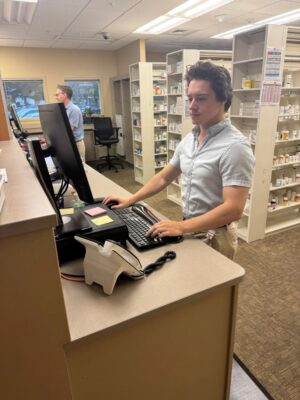
Chase King, a recent graduate of the Ambulatory Care Pharmacy Residency, looks up prescription information at the Unify Community Health, Northeast Community Center Pharmacy in Spokane.
care professionals for careers in community health.
The one-year program gives residents hands-on experience caring for patients in YVFWC clinics and pharmacies. They conduct independent clinical visits, help patients manage chronic conditions such as diabetes and hypertension, and build essential skills in medication dispensing, management, and patient counseling.
“You get to focus on developing your skills and then immediately apply that to direct patient care,” said Chase King, a recent graduate of the Ambulatory Care Pharmacy Residency. “It’s rewarding to work with underserved patients and really make an impact.”
Residents train in YVFWC clinics and work with diverse patient populations while rotating through specialty areas including HIV care, refugee health, population health, and pharmacy administration.
Residents also gain experience working under Collaborative Drug Therapy Agreements, which allow pharmacists and providers to work together to manage certain aspects of a patient's medication therapy. These agreements help patients receive timely care, improve coordination among care team members, and reduce some of the pressure on busy primary care providers.
Mentorship is a cornerstone of the program. Residents work closely with experienced preceptors and organizational leaders who help them translate classroom learning into real-world patient care.
“By the end of the year, they walk away with a lot of insight into the organization and the whole field of pharmacy,” said Evan Sainsbury, Associate Director of Clinical Pharmacy and Residency Program Director.
For King, the residency offered more than advanced clinical training. It gave him the opportunity to build relationships with patients and contribute to care teams serving communities that often face barriers to health care. Now, as a pharmacist at Miramar Health Center in Kennewick, Washington, he continues that work every day.