
Protecting Those Who Protect Us: Pilot Program Promotes Skin Cancer Prevention and Provider Education
Under the summer sun, wildland firefighters put themselves in harm’s way to protect our homes, communities and natural resources. They train for flames, toxic smoke, extreme heat and physical exhaustion. One threat, however, often goes unnoticed: skin cancer.
According to the American Academy of Dermatology, firefighters face up to a 36% greater risk of melanoma and a 72% greater risk of dying from skin cancer than other career
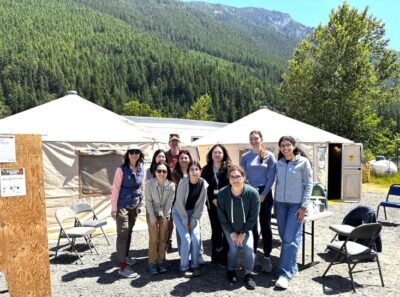
Dr. Zed Zha (left) with the volunteers who participated in Protecting Those Who Protect Us skin cancer screening pilot project at the Washington State Firefighting Training Academy.
professionals.
Dr. Zed Zha, a family physician specializing in dermatology at Toppenish Medical-Dental Clinic, wanted to find a meaningful way to support firefighters. Conversations with colleagues brought their sacrifices into sharper focus, including one whose home was spared during a recent wildfire after firefighters stopped the flames just 30 feet from his property.
Inspired by a skin cancer screening program she participated in during her dermatology fellowship, Dr. Zha approached the Washington State Department of Natural Resources (DNR) about launching a pilot screening project for wildland firefighters.
What emerged was Protecting Those Who Protect Us, a pilot project that combined skin cancer screenings and prevention education for firefighters with hands-on learning opportunities for clinicians, residents and students.
The screening event took place at the Washington State Firefighting Training Academy. A volunteer team of 10 clinicians, residents, support staff and University of Washington students screened 41 firefighter trainees and instructors. The team also provided the firefighters with education on skin cancer prevention and identified several skin lesions that warranted follow-up evaluation.
Clinicians also identified common conditions such as folliculitis and foot infections linked to long hours carrying loads and wearing protective gear and boots. While these conditions are not typically life-threatening, the team was able to provide guidance on prevention and treatment, which improves the comfort and overall wellness of firefighters.
Training Opportunities
Protecting Those Who Protect Us provided a valuable educational opportunity for participating clinicians. The day before the event, Dr. Zha hosted a dermoscopy workshop to familiarize participants with a handheld device that allows clinicians to examine skin lesions in greater detail, helping identify concerning lesions earlier and improve diagnostic accuracy.
For many participants, it was their first exposure to dermoscopy, and the chance to immediately apply those skills in a real-world setting left a lasting impression.
"One of the residents came to me and she said that she feels a lot more confident using a dermatoscope, and she's actually looking into incorporating it into her future practice," said Dr. Zha.
Expanding access to dermoscopy by training providers is one of Dr. Zha's goals. She hopes that increasing providers' confidence in evaluating skin lesions will reduce the need for dermatology referrals within our clinics. According to Dr. Zha, 83% of Medicaid patients in the United States lack access to a dermatologist, making timely specialty care difficult. Expanding dermatology skills among primary care providers can help patients receive more timely evaluations.
“Using the dermatoscope to screen people isn’t a skill that everyone is familiar with,” said Dr. Zha. “Once clinicians learn how to use it, it can help reduce the number of benign skin biopsies that are performed.”
Reducing unnecessary biopsies benefits patients by sparing them from needless procedures while also reducing stress and anxiety that can accompany concerns about skin cancer.
Dr. Zha is grateful to everyone who helped make the project possible. The enthusiasm and dedication of volunteers, staff and partners contributed greatly to its success, and she is already exploring the possibility of holding another screening event next year.
“It felt meaningful to give back to the people who risk so much to protect our communities, even if only in small ways,” said Dr. Zha.